Vaak
Magazine
Writing on the arts, culture, and histories of South India.
Vaak Magazine is the editorial arm of the Vaak Foundation. Through essays, interviews, archival explorations, and visual storytelling, the magazine examines the many worlds of South Indian arts—from Carnatic music and dance traditions to visual arts, poetry, and cultural history. Each issue brings together writers, scholars, musicians, artists, and researchers, creating a space for thoughtful reflection on artistic practice and cultural memory.
Vaak Magazine
Vaak Magazine is the editorial publication of the Vaak Foundation. Conceived during the stillness of the 2020 lockdown, the magazine began as an experiment in bringing together thoughtful writing, visual design, and deep engagement with the arts of South India.
The name Vaak draws from the Sanskrit concept associated with the Vaaggeyakara—the composer who creates both the lyrical (vaak) and musical (geya) dimensions of a composition. Vaak therefore signifies “that which is spoken or expressed,” making it an apt name for a magazine devoted to articulating ideas around art, music, dance, literature, and history.
Across its issues, Vaak Magazine has brought together musicians, scholars, dancers, artists, historians, and writers to reflect on artistic traditions, document cultural histories, and explore the many ways in which art continues to shape our intellectual and emotional worlds.
Each issue is thoughtfully designed with a unifying visual theme that appears across the cover, contents page, centre poster, and final page, creating a dialogue between visual culture and scholarship.
Editorial Themes
Vaak Magazine explores the many worlds of South Indian arts through writing, visual storytelling, and archival inquiry. While Carnatic music forms an important core of our engagement, the magazine consciously moves across disciplines, recognising that artistic traditions have always existed in conversation with one another.
Our pages bring together reflections on music, dance, painting, cinema, photography, poetry, and cultural history, situating artistic practice within broader intellectual and social contexts. We are equally interested in documenting the past, examining the present, and imagining the future trajectories of the arts.
The magazine features analytical essays, artist
interviews, archival discoveries, visual
studies, and personal reflections,
offering readers multiple ways to
engage with artistic traditions.
Through these diverse perspectives,
Vaak seeks to foster thoughtful
conversations that deepen our
understanding of the creative
worlds that shape South
Indian culture.
Editorial Areas:
- Carnatic Music
- Dance Traditions
- Visual Arts & Painting
- Cinema & Filmmaking
- Photography
- Poetry & Literature
- Cultural History
- Artist Profiles & Interviews
- Archival Research
- Aesthetics & Philosophy of Art
Sriram
Venkatakrishnan
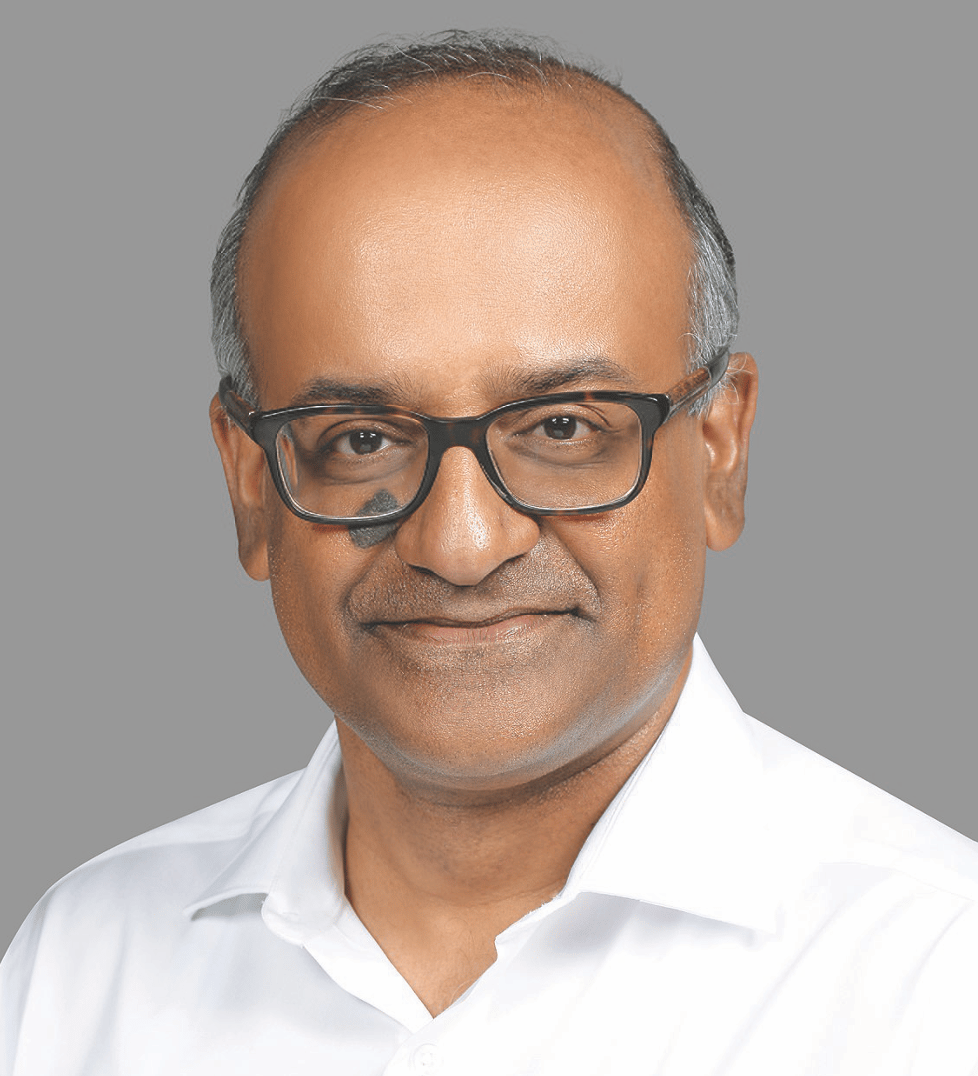
Sriram is an Indian entrepreneur, columnist, music historian and heritage activist.
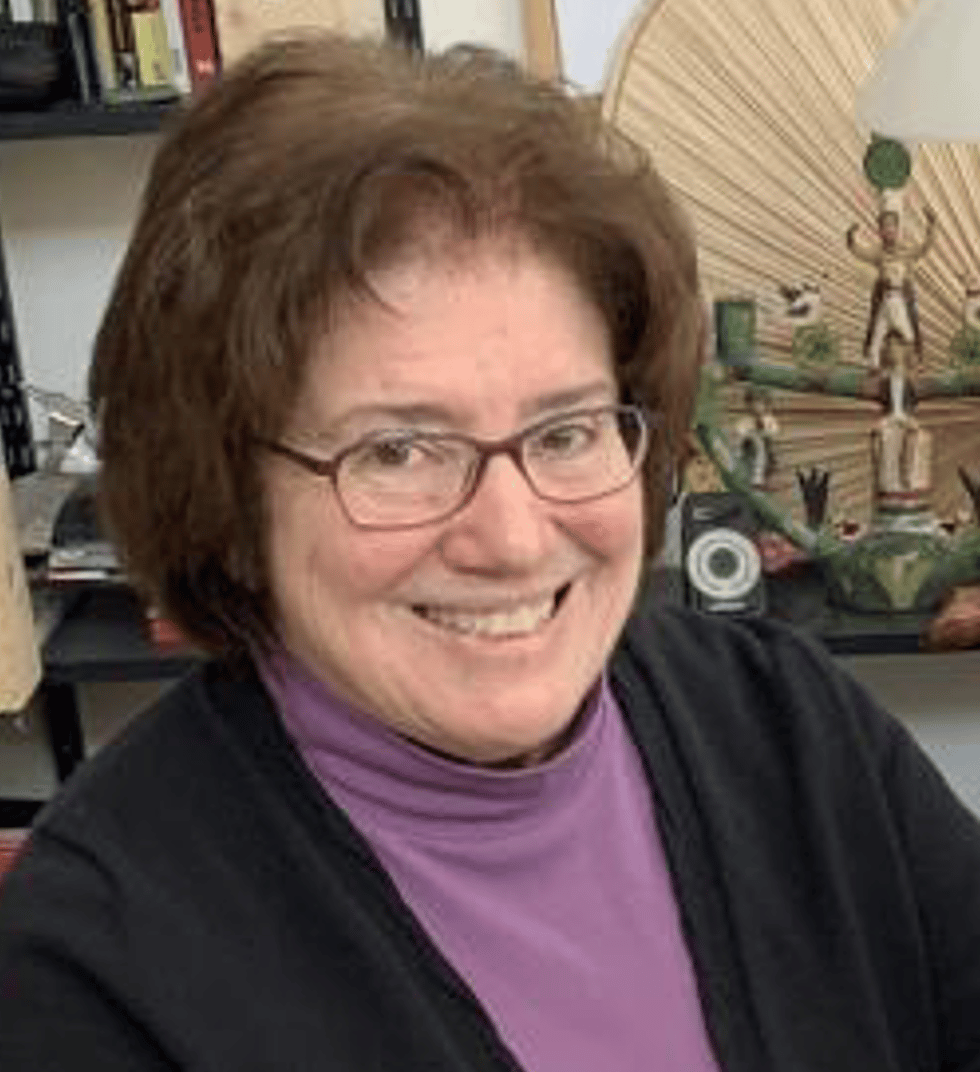
Jody
Cormack
Jody Cormack is a musician based out of USA. She is the Archives Assistant for Wesleyan University’s World Music Archives at Connecticut.
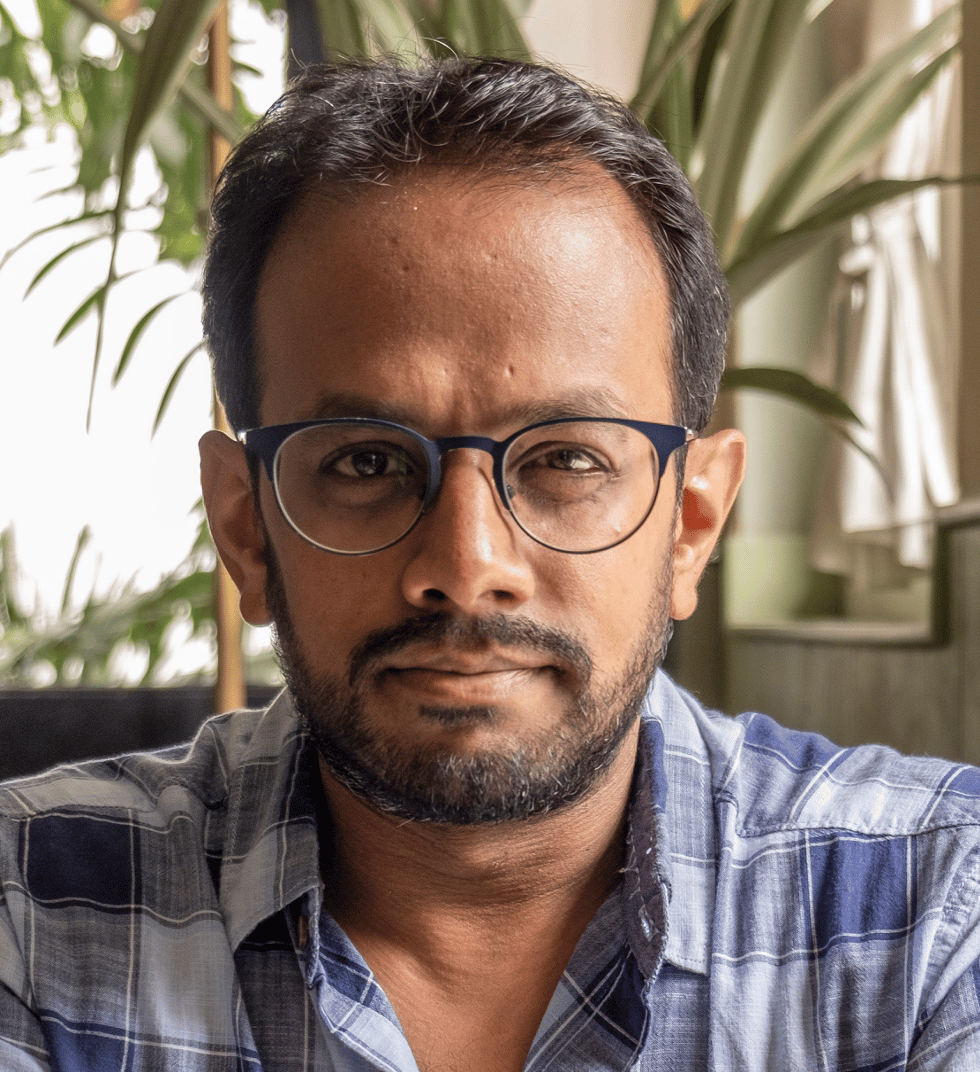
Lakshmi
Viswanathan
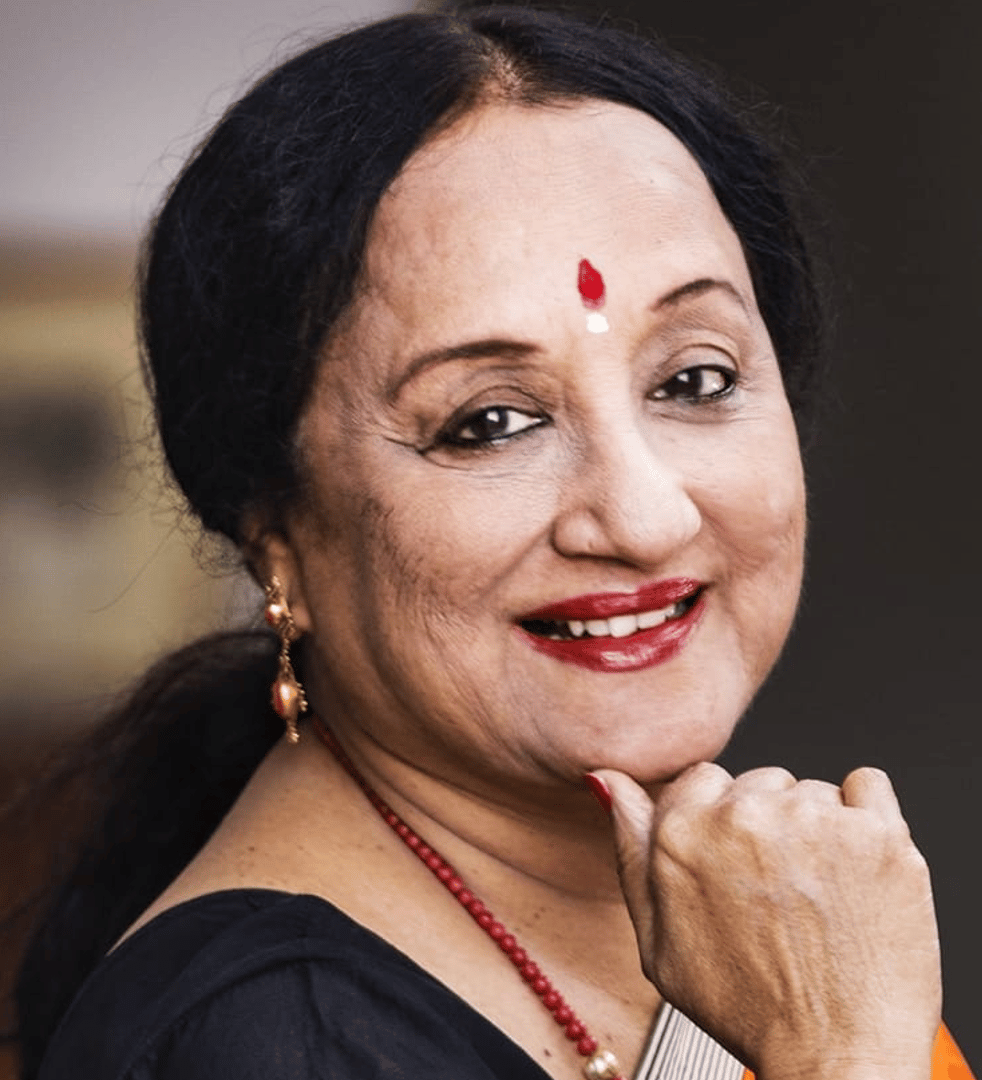
Lakshmi Vishwanathan is a Bharatanatyam dancer, teacher, writer, researcher and scholar. Her articles on dance and music have been published in newspapers including The Hindu and many other journals of repute.
Samanth
Subramaniam
Samanth studied journalism at Penn State University and international relations at Columbia University. In 2018–19, he was a Leon Levy Fellow at the City University of New York. He is also a regular contributor to The New Yorker, The New York Times, The Guardian and WIRED.
Contributors
Vaak Magazine has featured contributions from a wide community of musicians, scholars, dancers, writers, visual artists, and researchers.
The boundaries that exist between artforms like dance, music, literature and visual arts is generally thought of as distinct and marked but we think otherwise. Dance flows into music, poetry flows into dance, visual arts flows into movement and through our magazine, we attempt to bring out the inter-connectedness in form and function that is so non-linear and yet, coherent, in this space. Our contributors include some renowned names in the music, literary and dance world!
Simon
Ray
Simon is a London based art dealer specialising in Indian and Islamic art. He has a gallery focusing on Indian and Islamic art right in the centre of London in King’s street, St. James’s named ‘Simon Ray – Indian & Islamic Works of Art’
Ashvin
Rajagopalan
Ashvin is an art historian and curator. He is the director of Ashvita's and Piramal
Museum of Art
Arvind Kumar
Sankar
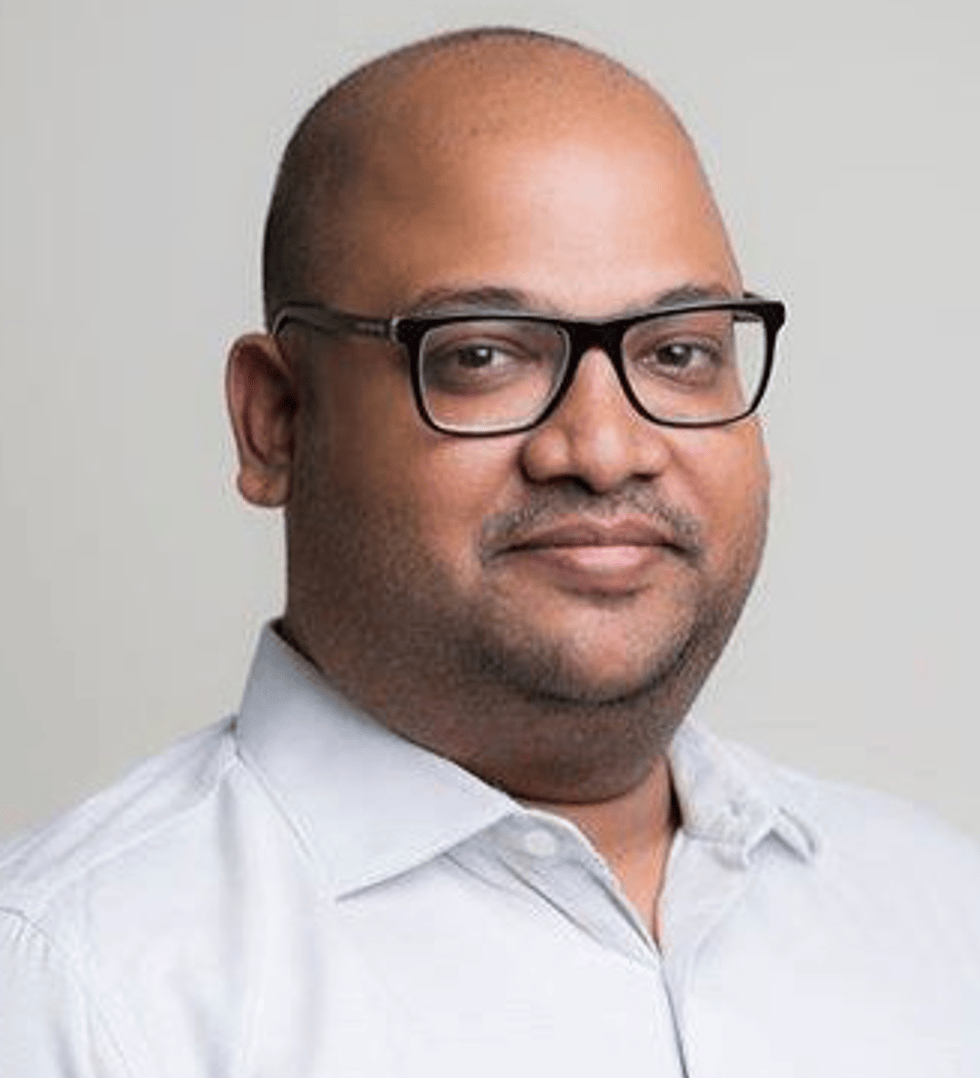
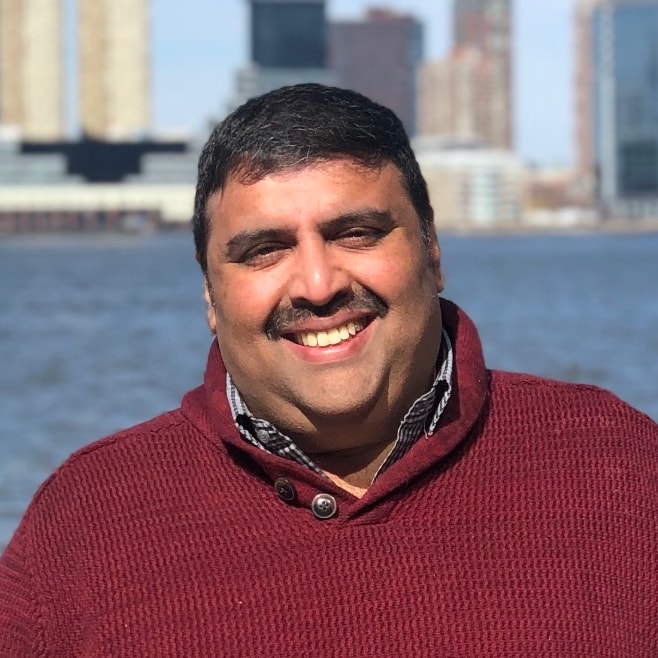
Arvind is the Founder Chairman of Arvind Constructions. He also chairs the LAMPS trust. Arvind is a collector of antiquities and heritage artifacts. His first book is ‘Pulli Kollam and the Creative Mind’ published by Palaniappa Brothers, Chennai.
Keshav
Desiraju
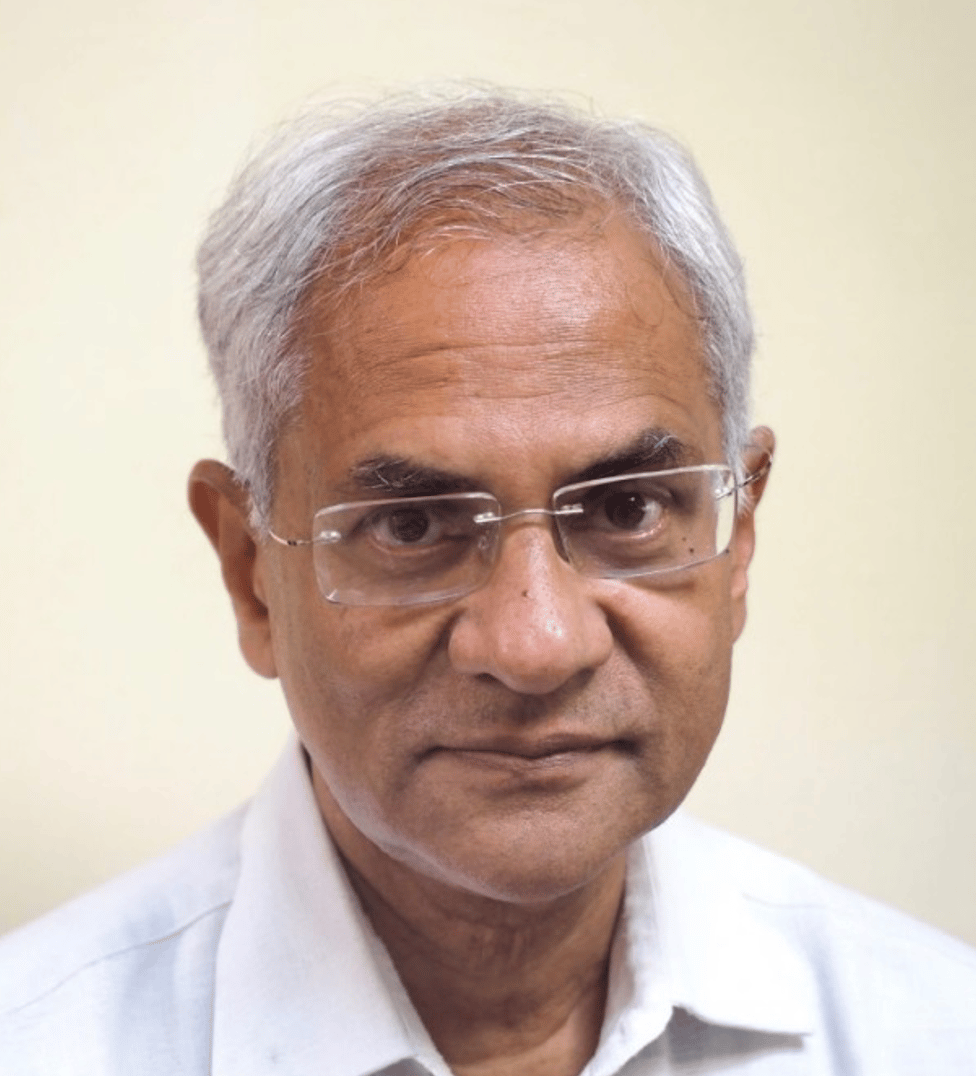
Keshav Desiraju was educated at the universities of Bombay, Cambridge and Harvard and worked in the civil service. He is a co-editor of ‘Healers or Predators? Healthcare Corruption in India’, Oxford University Press, 2018.
Issue 01
Theme: Vaak — The Spoken Word of Music
View Issue
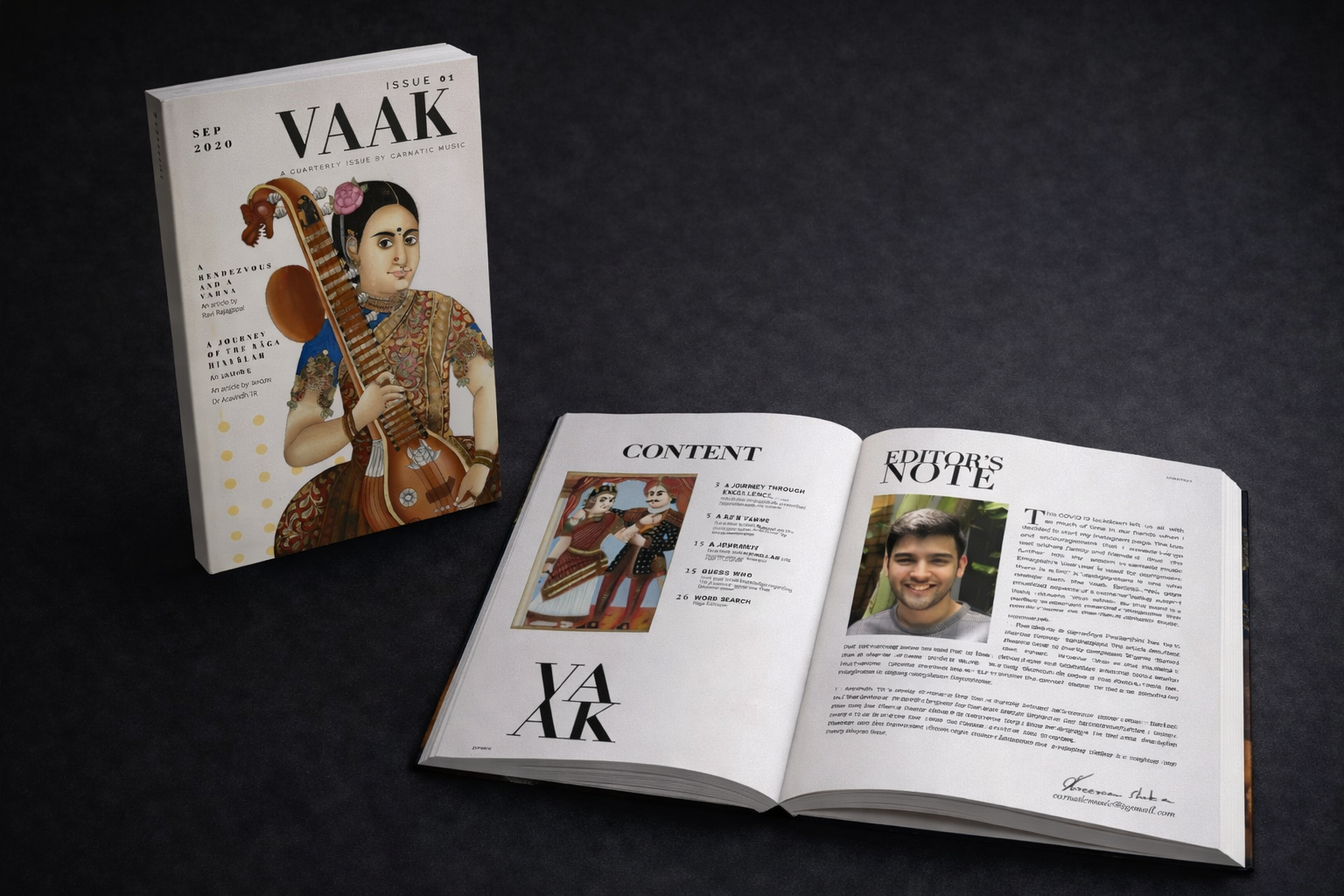
The inaugural issue of Vaak was born during the COVID-19 lockdown, a period that offered unexpected stillness and reflection. Inspired by the concept of the Vaaggeyakara, this edition reflects on the idea of Vaak as the expressive power of language, music, and artistic thought.
The issue features Ravi Rajagopal’s evocative reconstruction of a historic meeting between two Trinity composers and Dr. Aravindh TR’s exploration of the evolution of raga Hindolam.
Articles:
- A Rendezvous and a Varna - Ravi Rajagopal
- A Journey of the Raga Hindolam - Dr. Aravindh TR
Issue 02
Theme: Vaak — The Spoken Word of Music
View Issue
View as flipbook
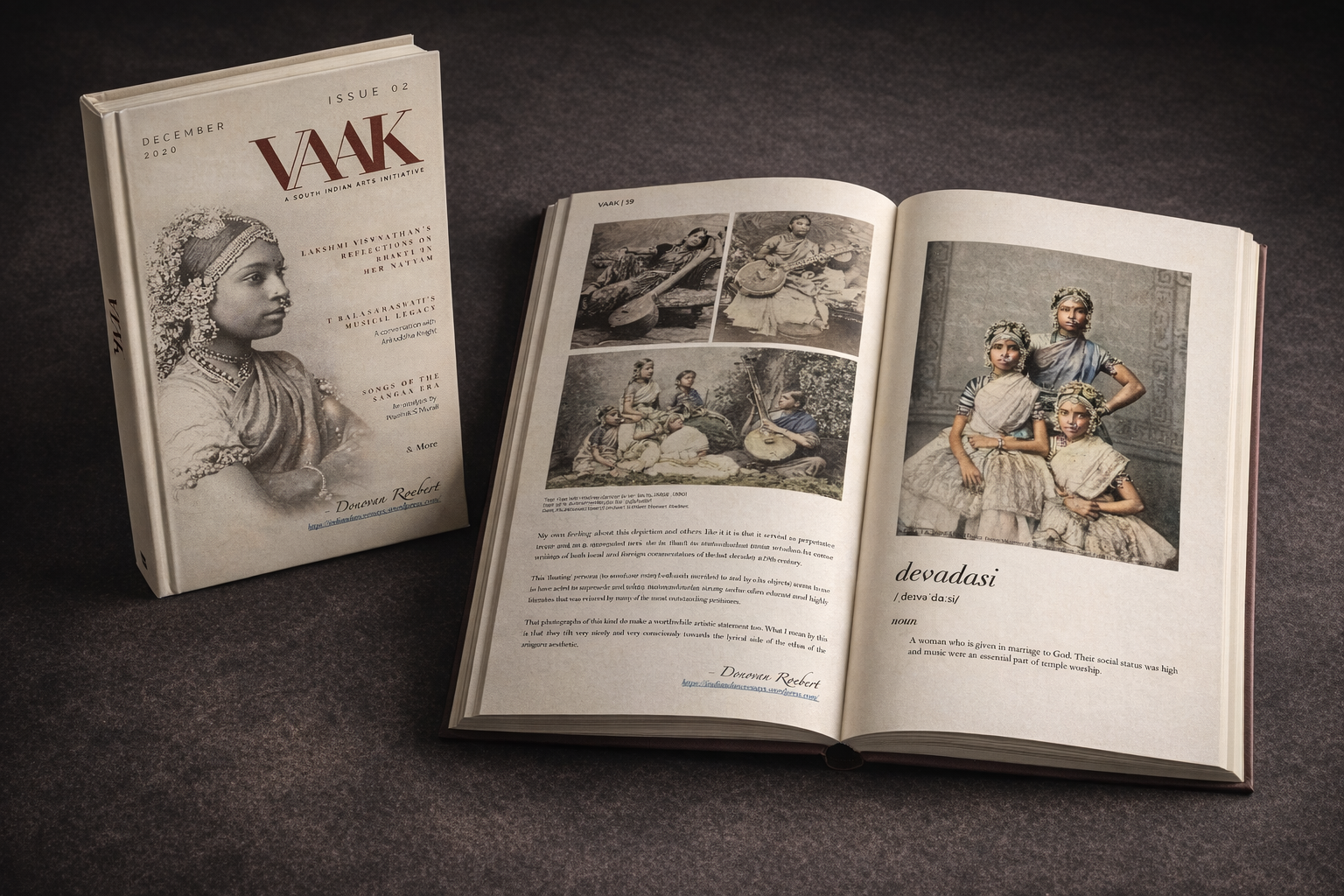
This edition reflects on Vaak as a collaborative intellectual space and pays tribute to the profound artistic contributions of the Devadasi tradition. The issue features rare historical photographs and explores the intersections between music, dance, poetry, and visual art.
Articles:
- Following the Music - Rithvik Raja
- The Musical Legacy of T. Balasaraswati - Aniruddha Knight
- Rudraveenai and the Raga Janaranjani - Ravi Rajagopalan
- Bhakti in Natyam - Lakshmi Viswanathan
- Musical Portraits - Amar Ramesh
- Songs of the Sangam Era - Prathik Sudha Murali
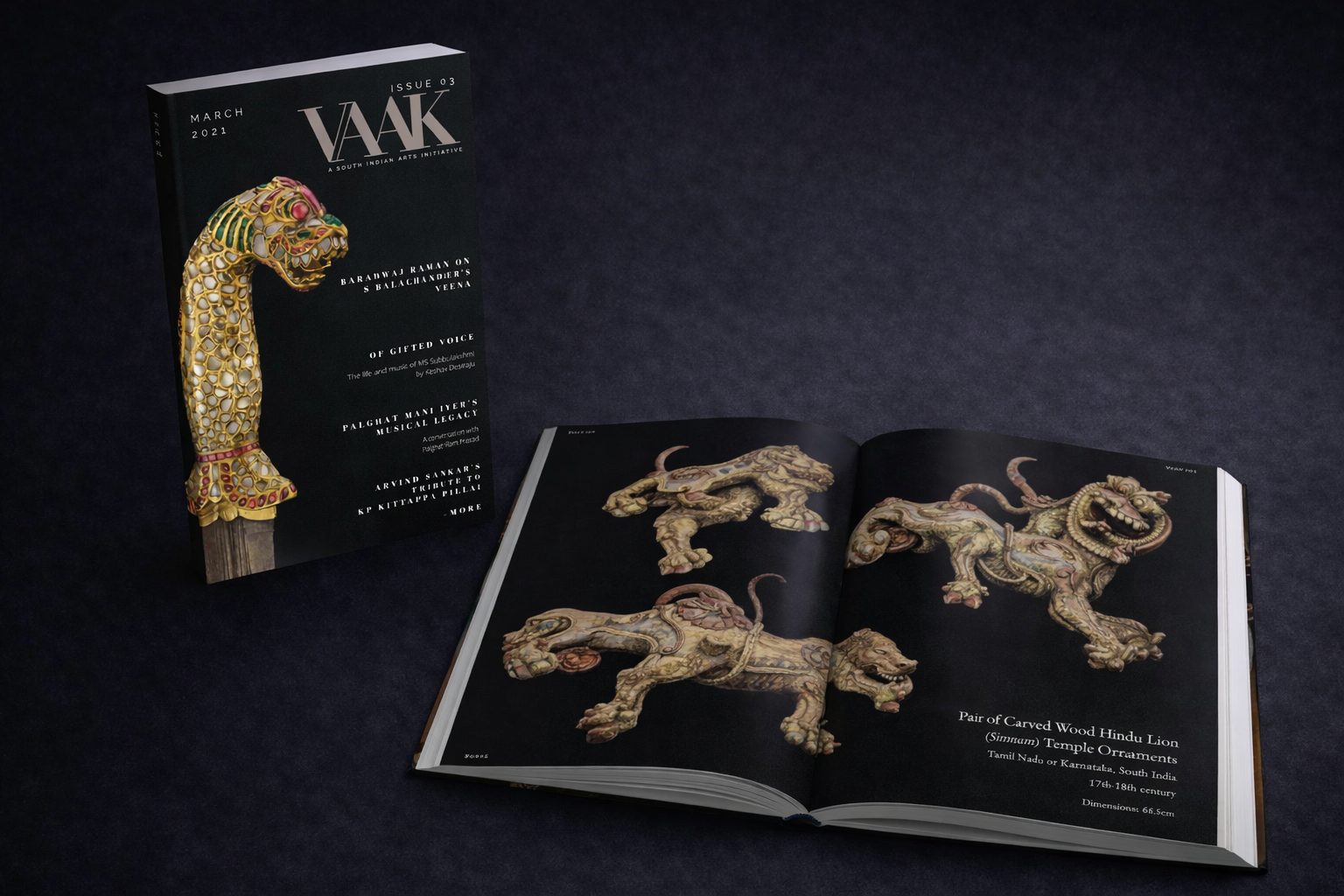
Issue 03
Theme: Yali — Strength and Vigilance
View Issue
View as flipbook
Published during a difficult phase of the pandemic, this edition draws inspiration from the mythical Yali, a symbol of strength and watchfulness in South Indian temple architecture. The issue reflects on artistic resilience while exploring music, visual arts, scholarship, and performance traditions.
Articles:
- Of Gifted Voice - Keshav Desiraju
- Tanjavur KP Kittappa Pillai - Arvind Kumar Sankar
- The Musical Legacy of Palghat TS Mani Iyer - Palghat Ramprasad
- My Tryst with Tanjore Paintings - Veeren Koneru
- An Analysis of Raga Neelambari - Shreeraam Shankar
- S. Balachander, the Phenomenon - Baradwaj Raman & Amar Ramesh
- Who Were the Real Trinity of Carnatic Music? - Boddapati Shivanand
- Rangaramanuja Ayyangar, Another Ekalavya - Dr. KG Vijayakrishnan
- My Experiments with the Mridangam - Sumesh Narayanan
- Vaak Recommends Madurai Mani Iyer - Shreyas Gowrishanker
Issue 04
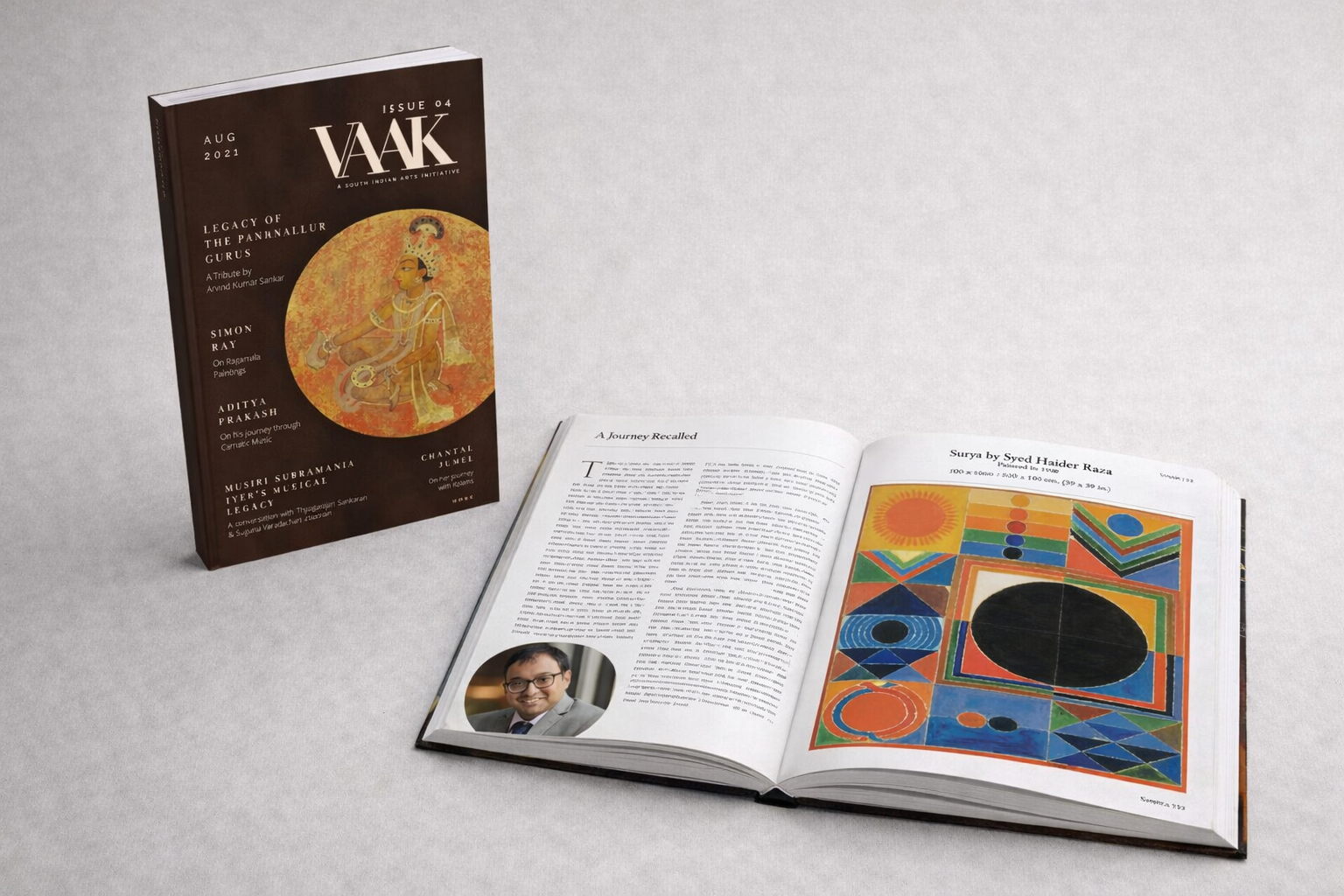
Theme: Surya — The Light of Consciousness
View Issue
View as flipbook
This edition explores the philosophical idea of consciousness through art, mythology, music, and literature. Drawing from diverse traditions—from Vedic philosophy to modern neuroscience—it examines how artists capture the mystery of awareness and perception.
Articles:
- A Life Journey with Kolams - Chantal Jumel
- Indian Copyright Laws - Ananth Padmanabhan
- Ragamala Series of Paintings - Simon Ray
- The Musical Legacy of Musiri Subramania Iyer - Thyagarajan Sankaran & Suguna Varadachari
- Legacy of the Pandanallur Gurus - Arvind Kumar Sankar
- My Journey with Karnatik Music - Aditya Prakash
- Thillanas: An Introduction - Ananthakrishna Panuganti
Issue 05
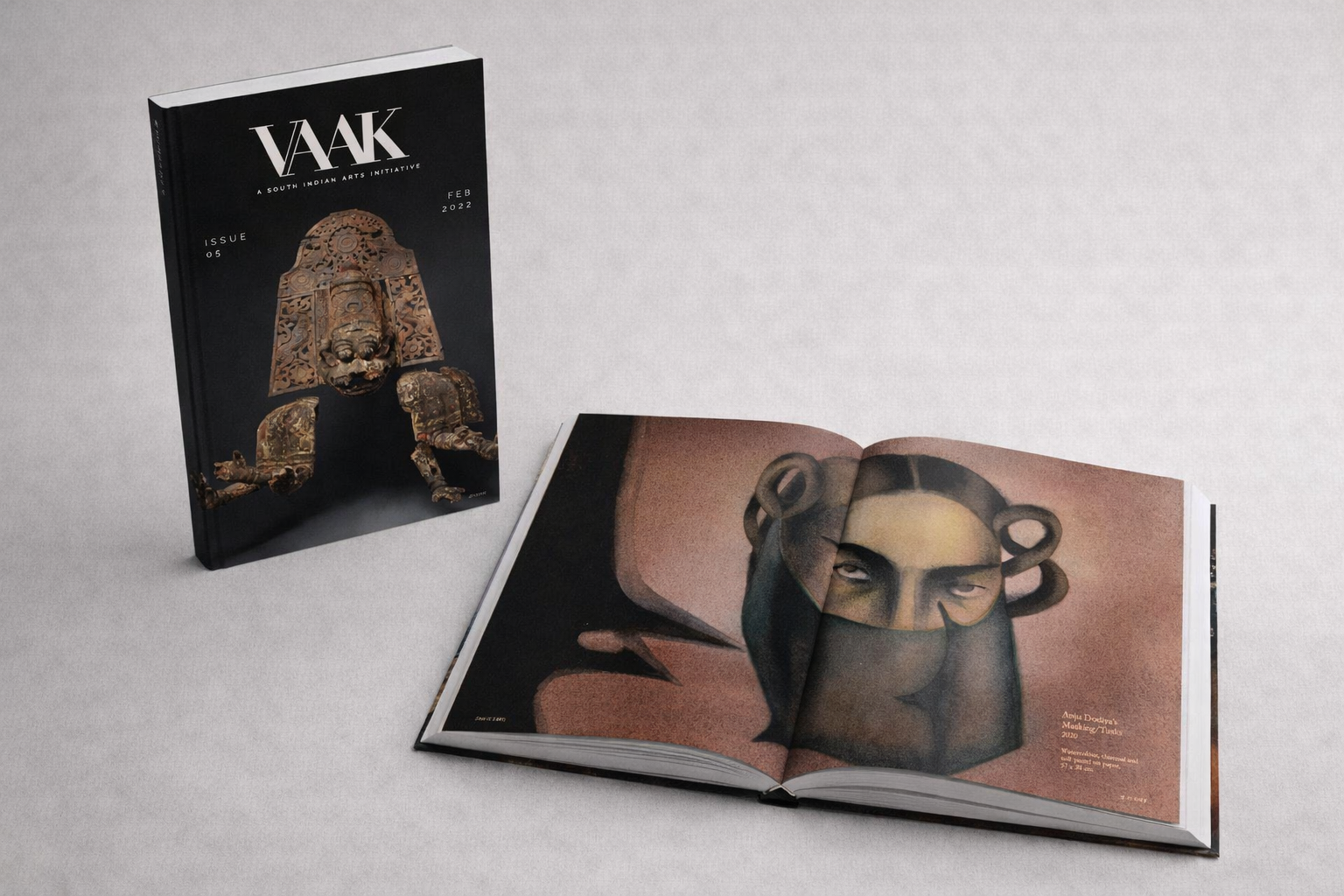
Theme: Masks — Reflection in a Time of Pandemic
View Issue
View as flipbook
This edition reflects on the shifting realities of artistic life during the pandemic and the transformations brought about by digital performance spaces. The theme of masks evokes both concealment and revelation in a world negotiating uncertainty.
The issue also pays tribute to scholar and connoisseur Keshav Desiraju, whose intellectual generosity deeply influenced the Vaak community.
Articles:
- The Kalyani Daughters - Donnovan Roebert
- The Musical Legacy of Ramnad Krishnan - RK Ramanathan
- Keshav & His Music - Samanth Subramanian
- Shyamala Mohanraj: Her Art & Values - NC Srinivasaraghavan
- The Genius of Karaikurichi Arunachalam - MV Swaroop
- Farewell Keshav! - Sriram Venkatakrishnan
- Karaikurichi Arunachalam: A Short Profile - Shailesh Ramamurthy & Lalitharam
- Vaak Recommends MD Ramanathan - Shreyas Kuchibhotla & Ananthakrishna Panuganti
Issue 06
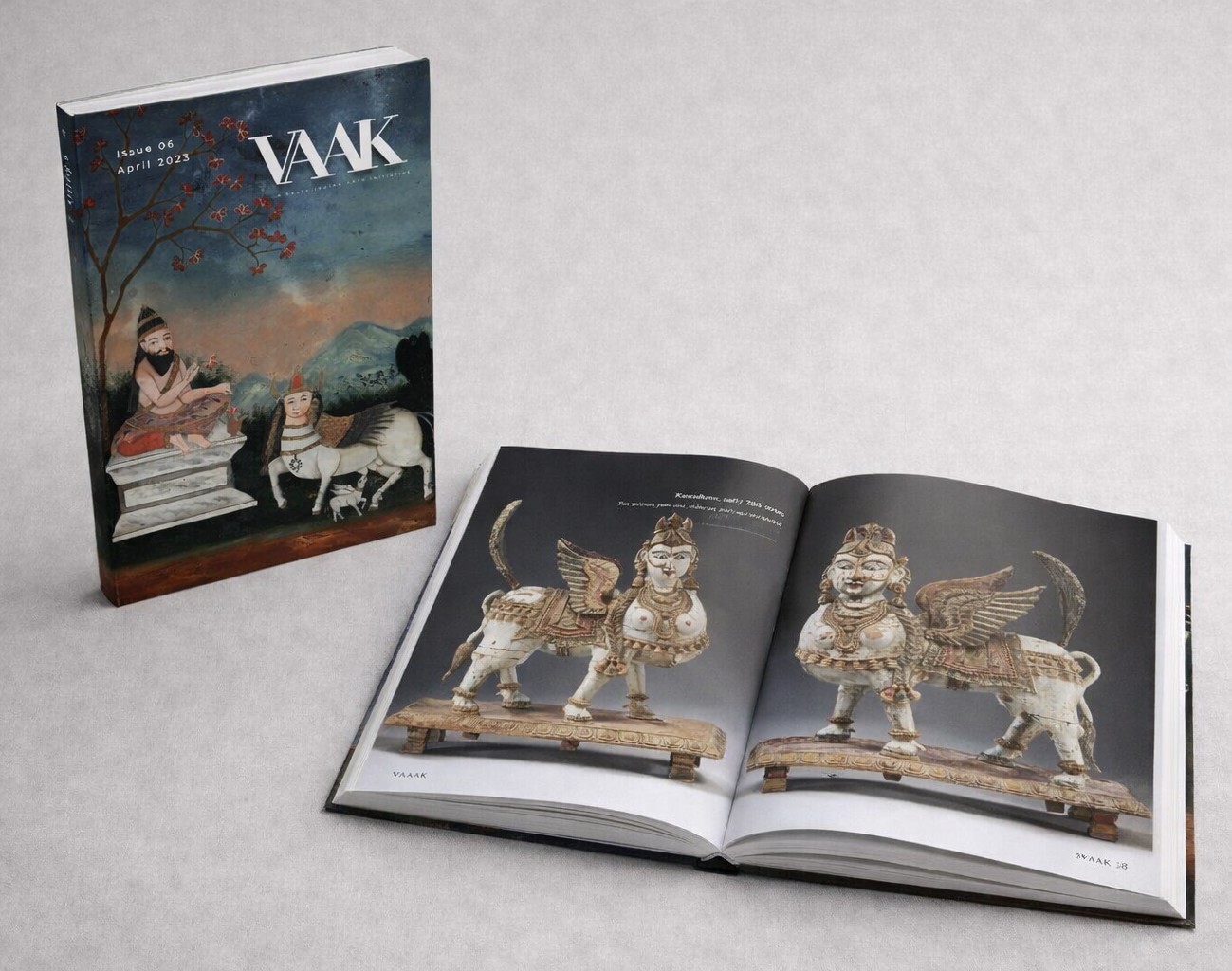
Theme: Kamadhenu — Abundance and Renewal
View Issue
View as flipbook
The sixth edition marks a moment of reflection and transition as Vaak evolves into the Vaak Foundation. Inspired by the image of Kamadhenu, the divine cow symbolising abundance, the issue reflects on artistic values, intellectual generosity, and the communities that sustain the arts.
It also carries tributes to two beloved scholars and artists: Dr. KG Vijayakrishnan and Lakshmi Viswanathan.
Articles:
- The Madras Art Movement & Its Modernist Ideas - Ashvin E Rajagopalan & Isha Chaturvedi
- Ragas Unchained - Mahesh Menon
- The Stability of Tropes - Neela Bhaskar
- The Musical Legacy of T. Viswanathan - Jody Cormack
- Easwari Lending Library - Neeraja Srinivasan
- KG Vijayakrishnan - A Tribute - Lakshman
- Lakshmi Viswanathan - A Tribute - Divya Devaguptapu
Vaak
Magazine
Writing on the arts, culture, and histories of South India.
Vaak Magazine is the editorial arm of the Vaak Foundation. Through essays, interviews, archival explorations, and visual storytelling, the magazine examines the many worlds of South Indian arts—from Carnatic music and dance traditions to visual arts, poetry, and cultural history. Each issue brings together writers, scholars, musicians, artists, and researchers, creating a space for thoughtful reflection on artistic practice and cultural memory.
Vaak Magazine
Vaak Magazine is the editorial publication of the Vaak Foundation. Conceived during the stillness of the 2020 lockdown, the magazine began as an experiment in bringing together thoughtful writing, visual design, and deep engagement with the arts of South India.
The name Vaak draws from the Sanskrit concept associated with the Vaaggeyakara—the composer who creates both the lyrical (vaak) and musical (geya) dimensions of a composition. Vaak therefore signifies “that which is spoken or expressed,” making it an apt name for a magazine devoted to articulating ideas around art, music, dance, literature, and history.
Across its issues, Vaak Magazine has brought together musicians, scholars, dancers, artists, historians, and writers to reflect on artistic traditions, document cultural histories, and explore the many ways in which art continues to shape our intellectual and emotional worlds.
Each issue is thoughtfully designed with a unifying visual theme that appears across the cover, contents page, centre poster, and final page, creating a dialogue between visual culture and scholarship.
Editorial Themes
Vaak Magazine explores the many worlds of South Indian arts through writing, visual storytelling, and archival inquiry. While Carnatic music forms an important core of our engagement, the magazine consciously moves across disciplines, recognising that artistic traditions have always existed in conversation with one another.
Our pages bring together reflections on music, dance, painting, cinema, photography, poetry, and cultural history, situating artistic practice within broader intellectual and social contexts. We are equally interested in documenting the past, examining the present, and imagining the future trajectories of the arts.
The magazine features analytical essays, artist interviews,
archival discoveries, visual studies, and personal
reflections, offering readers multiple ways to
engage with artistic traditions. Through these
diverse perspectives, Vaak seeks to foster
thoughtful conversations that deepen
our understanding of the creative worlds
that shape South Indian culture.
Editorial Areas:
- Carnatic Music
- Dance Traditions
- Visual Arts & Painting
- Cinema & Filmmaking
- Photography
- Poetry & Literature
- Cultural History
- Artist Profiles & Interviews
- Archival Research
- Aesthetics & Philosophy of Art
Sriram
Venkatakrishnan
Sriram is an Indian entrepreneur, columnist, music historian and heritage activist.
Jody
Cormack
Jody Cormack is a musician based out of USA. She is the Archives Assistant for Wesleyan University’s World Music Archives at Connecticut.
Lakshmi
Viswanathan
Lakshmi Vishwanathan is a Bharatanatyam dancer, teacher, writer, researcher and scholar. Her articles on dance and music have been published in newspapers including The Hindu and many other journals of repute.
Samanth
Subramaniam
Samanth studied journalism at Penn State University and international relations at Columbia University. In 2018–19, he was a Leon Levy Fellow at the City University of New York. He is also a regular contributor to The New Yorker, The New York Times, The Guardian and WIRED.
Contributors
Vaak Magazine has featured contributions from a wide community of musicians, scholars, dancers, writers, visual artists, and researchers.
The boundaries that exist between artforms like dance, music, literature and visual arts is generally thought of as distinct and marked but we think otherwise. Dance flows into music, poetry flows into dance, visual arts flows into movement and through our magazine, we attempt to bring out the inter-connectedness in form and function that is so non-linear and yet, coherent, in this space. Our contributors include some renowned names in the music, literary and dance world!
Simon
Ray
Simon is a London based art dealer specialising in Indian and Islamic art. He has a gallery focusing on Indian and Islamic art right in the centre of London in King’s street, St. James’s named ‘Simon Ray – Indian & Islamic Works of Art’
Ashvin
Rajagopalan
Ashvin is an art historian and curator. He is the director of Ashvita's and Piramal
Museum of Art
Arvind Kumar
Sankar
Arvind is the Founder Chairman of Arvind Constructions. He also chairs the LAMPS trust. Arvind is a collector of antiquities and heritage artifacts. His first book is ‘Pulli Kollam and the Creative Mind’ published by Palaniappa Brothers, Chennai.
Keshav
Desiraju
Keshav Desiraju was educated at the universities of Bombay, Cambridge and Harvard and worked in the civil service. He is a co-editor of ‘Healers or Predators? Healthcare Corruption in India’, Oxford University Press, 2018.
Issue 01
Theme: Vaak — The Spoken Word of Music
View Issue
The inaugural issue of Vaak was born during the COVID-19 lockdown, a period that offered unexpected stillness and reflection. Inspired by the concept of the Vaaggeyakara, this edition reflects on the idea of Vaak as the expressive power of language, music, and artistic thought.
The issue features Ravi Rajagopal’s evocative reconstruction of a historic meeting between two Trinity composers and Dr. Aravindh TR’s exploration of the evolution of raga Hindolam.
Articles:
- A Rendezvous and a Varna - Ravi Rajagopal
- A Journey of the Raga Hindolam - Dr. Aravindh TR
Issue 02
Theme: Vaak — The Spoken Word of Music
View Issue
View as flipbook
This edition reflects on Vaak as a collaborative intellectual space and pays tribute to the profound artistic contributions of the Devadasi tradition. The issue features rare historical photographs and explores the intersections between music, dance, poetry, and visual art.
Articles:
- Following the Music - Rithvik Raja
- The Musical Legacy of T. Balasaraswati - Aniruddha Knight
- Rudraveenai and the Raga Janaranjani - Ravi Rajagopalan
- Bhakti in Natyam - Lakshmi Viswanathan
- Musical Portraits - Amar Ramesh
- Songs of the Sangam Era - Prathik Sudha Murali
Issue 03
Theme: Yali — Strength and Vigilance
View Issue
View as flipbook
Published during a difficult phase of the pandemic, this edition draws inspiration from the mythical Yali, a symbol of strength and watchfulness in South Indian temple architecture. The issue reflects on artistic resilience while exploring music, visual arts, scholarship, and performance traditions.
Articles:
- Of Gifted Voice - Keshav Desiraju
- Tanjavur KP Kittappa Pillai - Arvind Kumar Sankar
- The Musical Legacy of Palghat TS Mani Iyer - Palghat Ramprasad
- My Tryst with Tanjore Paintings - Veeren Koneru
- An Analysis of Raga Neelambari - Shreeraam Shankar
- S. Balachander, the Phenomenon - Baradwaj Raman & Amar Ramesh
- Who Were the Real Trinity of Carnatic Music? - Boddapati Shivanand
- Rangaramanuja Ayyangar, Another Ekalavya - Dr. KG Vijayakrishnan
- My Experiments with the Mridangam - Sumesh Narayanan
- Vaak Recommends Madurai Mani Iyer - Shreyas Gowrishanker
Issue 04
Theme: Surya — The Light of Consciousness
View Issue
View as flipbook
This edition explores the philosophical idea of consciousness through art, mythology, music, and literature. Drawing from diverse traditions—from Vedic philosophy to modern neuroscience—it examines how artists capture the mystery of awareness and perception.
Articles:
- A Life Journey with Kolams - Chantal Jumel
- Indian Copyright Laws - Ananth Padmanabhan
- Ragamala Series of Paintings - Simon Ray
- The Musical Legacy of Musiri Subramania Iyer - Thyagarajan Sankaran & Suguna Varadachari
- Legacy of the Pandanallur Gurus - Arvind Kumar Sankar
- My Journey with Karnatik Music - Aditya Prakash
- Thillanas: An Introduction - Ananthakrishna Panuganti
Issue 05
Theme: Masks — Reflection in a Time of Pandemic
View Issue
View as flipbook
This edition reflects on the shifting realities of artistic life during the pandemic and the transformations brought about by digital performance spaces. The theme of masks evokes both concealment and revelation in a world negotiating uncertainty.
The issue also pays tribute to scholar and connoisseur Keshav Desiraju, whose intellectual generosity deeply influenced the Vaak community.
Articles:
- The Kalyani Daughters - Donnovan Roebert
- The Musical Legacy of Ramnad Krishnan - RK Ramanathan
- Keshav & His Music - Samanth Subramanian
- Shyamala Mohanraj: Her Art & Values - NC Srinivasaraghavan
- The Genius of Karaikurichi Arunachalam - MV Swaroop
- Farewell Keshav! - Sriram Venkatakrishnan
- Karaikurichi Arunachalam: A Short Profile - Shailesh Ramamurthy & Lalitharam
- Vaak Recommends MD Ramanathan - Shreyas Kuchibhotla & Ananthakrishna Panuganti
Issue 06
Theme: Kamadhenu — Abundance and Renewal
View Issue
View as flipbook
The sixth edition marks a moment of reflection and transition as Vaak evolves into the Vaak Foundation. Inspired by the image of Kamadhenu, the divine cow symbolising abundance, the issue reflects on artistic values, intellectual generosity, and the communities that sustain the arts.
It also carries tributes to two beloved scholars and artists: Dr. KG Vijayakrishnan and Lakshmi Viswanathan.
Articles:
- The Madras Art Movement & Its Modernist Ideas - Ashvin E Rajagopalan & Isha Chaturvedi
- Ragas Unchained - Mahesh Menon
- The Stability of Tropes - Neela Bhaskar
- The Musical Legacy of T. Viswanathan - Jody Cormack
- Easwari Lending Library - Neeraja Srinivasan
- KG Vijayakrishnan - A Tribute - Lakshman
- Lakshmi Viswanathan - A Tribute - Divya Devaguptapu
Vaak
Magazine
Writing on the arts, culture, and histories of South India.
Vaak Magazine is the editorial arm of the Vaak Foundation. Through essays, interviews, archival explorations, and visual storytelling, the magazine examines the many worlds of South Indian arts—from Carnatic music and dance traditions to visual arts, poetry, and cultural history. Each issue brings together writers, scholars, musicians, artists, and researchers, creating a space for thoughtful reflection on artistic practice and cultural memory.
Vaak Magazine
Vaak Magazine is the editorial publication of the Vaak Foundation. Conceived during the stillness of the 2020 lockdown, the magazine began as an experiment in bringing together thoughtful writing, visual design, and deep engagement with the arts of South India.
The name Vaak draws from the Sanskrit concept associated with the Vaaggeyakara—the composer who creates both the lyrical (vaak) and musical (geya) dimensions of a composition. Vaak therefore signifies “that which is spoken or expressed,” making it an apt name for a magazine devoted to articulating ideas around art, music, dance, literature, and history.
Across its issues, Vaak Magazine has brought together musicians, scholars, dancers, artists, historians, and writers to reflect on artistic traditions, document cultural histories, and explore the many ways in which art continues to shape our intellectual and emotional worlds.
Each issue is thoughtfully designed with a unifying visual theme that appears across the cover, contents page, centre poster, and final page, creating a dialogue between visual culture and scholarship.
Editorial Themes
Vaak Magazine explores the many worlds of South Indian arts through writing, visual storytelling, and archival inquiry. While Carnatic music forms an important core of our engagement, the magazine consciously moves across disciplines, recognising that artistic traditions have always existed in conversation with one another.
Our pages bring together reflections on music, dance, painting, cinema, photography,
poetry, and cultural history, situating artistic practice within broader
intellectual and social contexts. We are equally interested in
documenting the past, examining the present, and imagining
the future trajectories of the arts.
The magazine features analytical essays, artist interviews,
archival discoveries, visual studies, and personal
reflections, offering readers multiple ways to engage
with artistic traditions. Through these diverse
perspectives, Vaak seeks to foster thoughtful
conversations that deepen our understanding of
the creative worlds that shape South Indian culture.
Editorial Areas:
- Carnatic Music
- Dance Traditions
- Visual Arts & Painting
- Cinema & Filmmaking
- Photography
- Poetry & Literature
- Cultural History
- Artist Profiles & Interviews
- Archival Research
- Aesthetics & Philosophy of Art
Sriram
Venkatakrishnan
Sriram is an Indian entrepreneur, columnist, music historian and heritage activist.
Jody
Cormack
Jody Cormack is a musician based out of USA. She is the Archives Assistant for Wesleyan University’s World Music Archives at Connecticut.
Samanth
Subramaniam
Samanth studied journalism at Penn State University and international relations at Columbia University. In 2018–19, he was a Leon Levy Fellow at the City University of New York. He is also a regular contributor to The New Yorker, The New York Times, The Guardian and WIRED.
Lakshmi
Viswanathan
Lakshmi Vishwanathan is a Bharatanatyam dancer, teacher, writer, researcher and scholar. Her articles on dance and music have been published in newspapers including The Hindu and many other journals of repute.
Contributors
Vaak Magazine has featured contributions from a wide community of musicians, scholars, dancers, writers, visual artists, and researchers.
The boundaries that exist between artforms like dance, music, literature and visual arts is generally thought of as distinct and marked but we think otherwise. Dance flows into music, poetry flows into dance, visual arts flows into movement and through our magazine, we attempt to bring out the inter-connectedness in form and function that is so non-linear and yet, coherent, in this space. Our contributors include some renowned names in the music, literary and dance world!
Simon
Ray
Simon is a London based art dealer specialising in Indian and Islamic art. He has a gallery focusing on Indian and Islamic art right in the centre of London in King’s street, St. James’s named ‘Simon Ray – Indian & Islamic Works of Art’
Ashvin
Rajagopalan
Ashvin is an art historian and curator. He is the director of Ashvita's and Piramal
Museum of Art
Arvind Kumar
Sankar
Arvind is the Founder Chairman of Arvind Constructions. He also chairs the LAMPS trust. Arvind is a collector of antiquities and heritage artifacts. His first book is ‘Pulli Kollam and the Creative Mind’ published by Palaniappa Brothers, Chennai.
Keshav
Desiraju
Keshav Desiraju was educated at the universities of Bombay, Cambridge and Harvard and worked in the civil service. He is a co-editor of ‘Healers or Predators? Healthcare Corruption in India’, Oxford University Press, 2018.
Issue 01
Theme: Vaak — The Spoken Word of Music
View Issue
The inaugural issue of Vaak was born during the COVID-19 lockdown, a period that offered unexpected stillness and reflection. Inspired by the concept of the Vaaggeyakara, this edition reflects on the idea of Vaak as the expressive power of language, music, and artistic thought.
The issue features Ravi Rajagopal’s evocative reconstruction of a historic meeting between two Trinity composers and Dr. Aravindh TR’s exploration of the evolution of raga Hindolam.
Articles:
- A Rendezvous and a Varna - Ravi Rajagopal
- A Journey of the Raga Hindolam - Dr. Aravindh TR
Issue 02
Theme: Vaak — The Spoken Word of Music
View Issue
View as flipbook
This edition reflects on Vaak as a collaborative intellectual space and pays tribute to the profound artistic contributions of the Devadasi tradition. The issue features rare historical photographs and explores the intersections between music, dance, poetry, and visual art.
Articles:
- Following the Music - Rithvik Raja
- The Musical Legacy of T. Balasaraswati - Aniruddha Knight
- Rudraveenai and the Raga Janaranjani - Ravi Rajagopalan
- Bhakti in Natyam - Lakshmi Viswanathan
- Musical Portraits - Amar Ramesh
- Songs of the Sangam Era - Prathik Sudha Murali
Issue 03
Theme: Yali — Strength and Vigilance
View Issue
View as flipbook
Published during a difficult phase of the pandemic, this edition draws inspiration from the mythical Yali, a symbol of strength and watchfulness in South Indian temple architecture. The issue reflects on artistic resilience while exploring music, visual arts, scholarship, and performance traditions.
Articles:
- Of Gifted Voice - Keshav Desiraju
- Tanjavur KP Kittappa Pillai - Arvind Kumar Sankar
- The Musical Legacy of Palghat TS Mani Iyer - Palghat Ramprasad
- My Tryst with Tanjore Paintings - Veeren Koneru
- An Analysis of Raga Neelambari - Shreeraam Shankar
- S. Balachander, the Phenomenon - Baradwaj Raman & Amar Ramesh
- Who Were the Real Trinity of Carnatic Music? - Boddapati Shivanand
- Rangaramanuja Ayyangar, Another Ekalavya - Dr. KG Vijayakrishnan
- My Experiments with the Mridangam - Sumesh Narayanan
- Vaak Recommends Madurai Mani Iyer - Shreyas Gowrishanker
Issue 04
Theme: Surya — The Light of Consciousness
View Issue
View as flipbook
This edition explores the philosophical idea of consciousness through art, mythology, music, and literature. Drawing from diverse traditions—from Vedic philosophy to modern neuroscience—it examines how artists capture the mystery of awareness and perception.
Articles:
- A Life Journey with Kolams - Chantal Jumel
- Indian Copyright Laws - Ananth Padmanabhan
- Ragamala Series of Paintings - Simon Ray
- The Musical Legacy of Musiri Subramania Iyer - Thyagarajan Sankaran & Suguna Varadachari
- Legacy of the Pandanallur Gurus - Arvind Kumar Sankar
- My Journey with Karnatik Music - Aditya Prakash
- Thillanas: An Introduction - Ananthakrishna Panuganti
Issue 05
Theme: Masks — Reflection in a Time of Pandemic
View Issue
View as flipbook
This edition reflects on the shifting realities of artistic life during the pandemic and the transformations brought about by digital performance spaces. The theme of masks evokes both concealment and revelation in a world negotiating uncertainty.
The issue also pays tribute to scholar and connoisseur Keshav Desiraju, whose intellectual generosity deeply influenced the Vaak community.
Articles:
- The Kalyani Daughters - Donnovan Roebert
- The Musical Legacy of Ramnad Krishnan - RK Ramanathan
- Keshav & His Music - Samanth Subramanian
- Shyamala Mohanraj: Her Art & Values - NC Srinivasaraghavan
- The Genius of Karaikurichi Arunachalam - MV Swaroop
- Farewell Keshav! - Sriram Venkatakrishnan
- Karaikurichi Arunachalam: A Short Profile - Shailesh Ramamurthy & Lalitharam
- Vaak Recommends MD Ramanathan - Shreyas Kuchibhotla & Ananthakrishna Panuganti
Issue 06
Theme: Kamadhenu — Abundance and Renewal
View Issue
View as flipbook
The sixth edition marks a moment of reflection and transition as Vaak evolves into the Vaak Foundation. Inspired by the image of Kamadhenu, the divine cow symbolising abundance, the issue reflects on artistic values, intellectual generosity, and the communities that sustain the arts.
It also carries tributes to two beloved scholars and artists: Dr. KG Vijayakrishnan and Lakshmi Viswanathan.
Articles:
- The Madras Art Movement & Its Modernist Ideas - Ashvin E Rajagopalan & Isha Chaturvedi
- Ragas Unchained - Mahesh Menon
- The Stability of Tropes - Neela Bhaskar
- The Musical Legacy of T. Viswanathan - Jody Cormack
- Easwari Lending Library - Neeraja Srinivasan
- KG Vijayakrishnan - A Tribute - Lakshman
- Lakshmi Viswanathan - A Tribute - Divya Devaguptapu